Case study · 2026
LiveRouteOps
A bilingual B2B marketing website for RouteOps, a transport management platform — built to turn German delivery, taxi and bus companies into qualified demo requests.
- Role
- Website design & development
- Year
- 2026
- Stack
- Next.js 16, TypeScript, Tailwind CSS 4, Formspree, GA4 / GTM
01
Project Overview
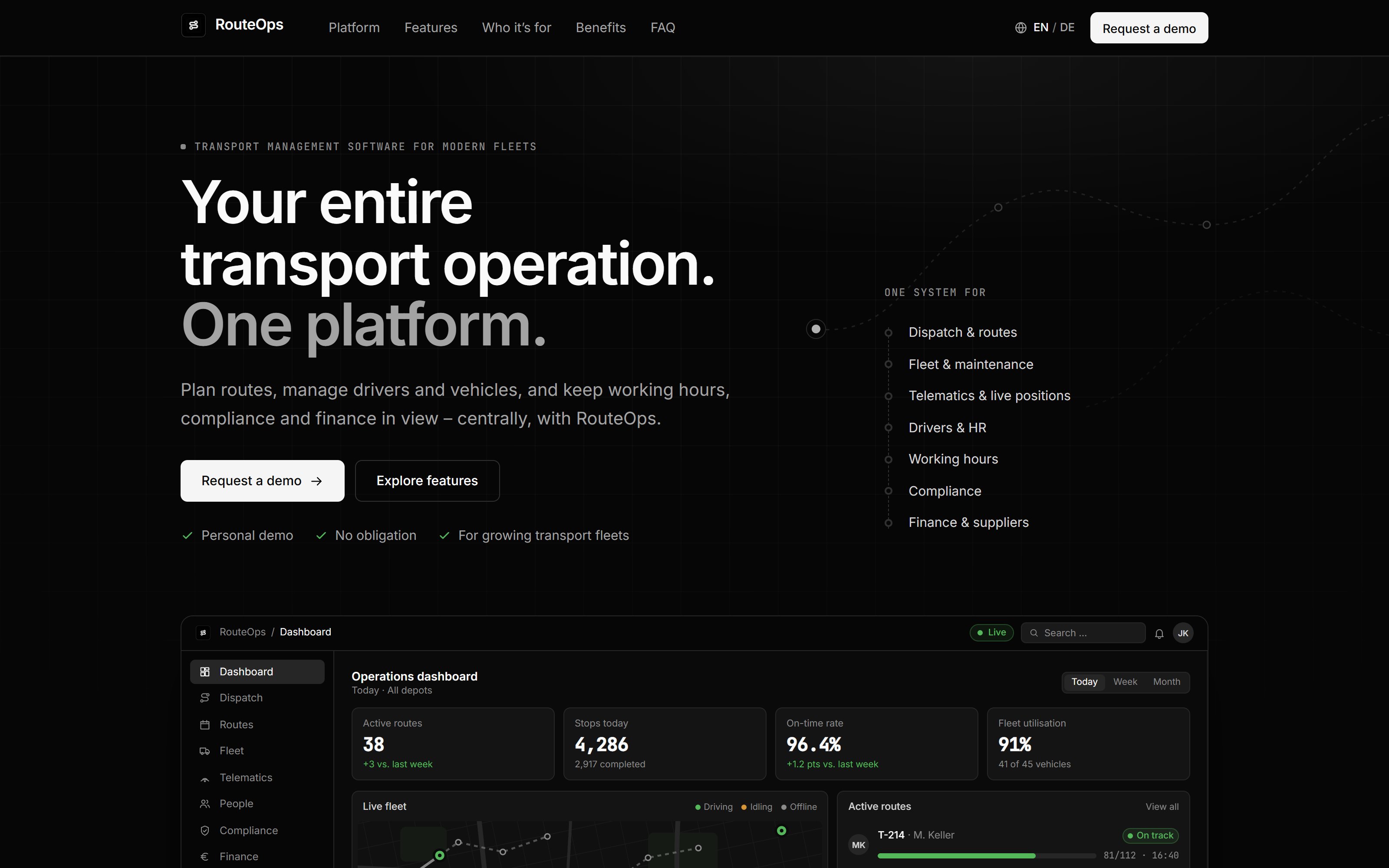
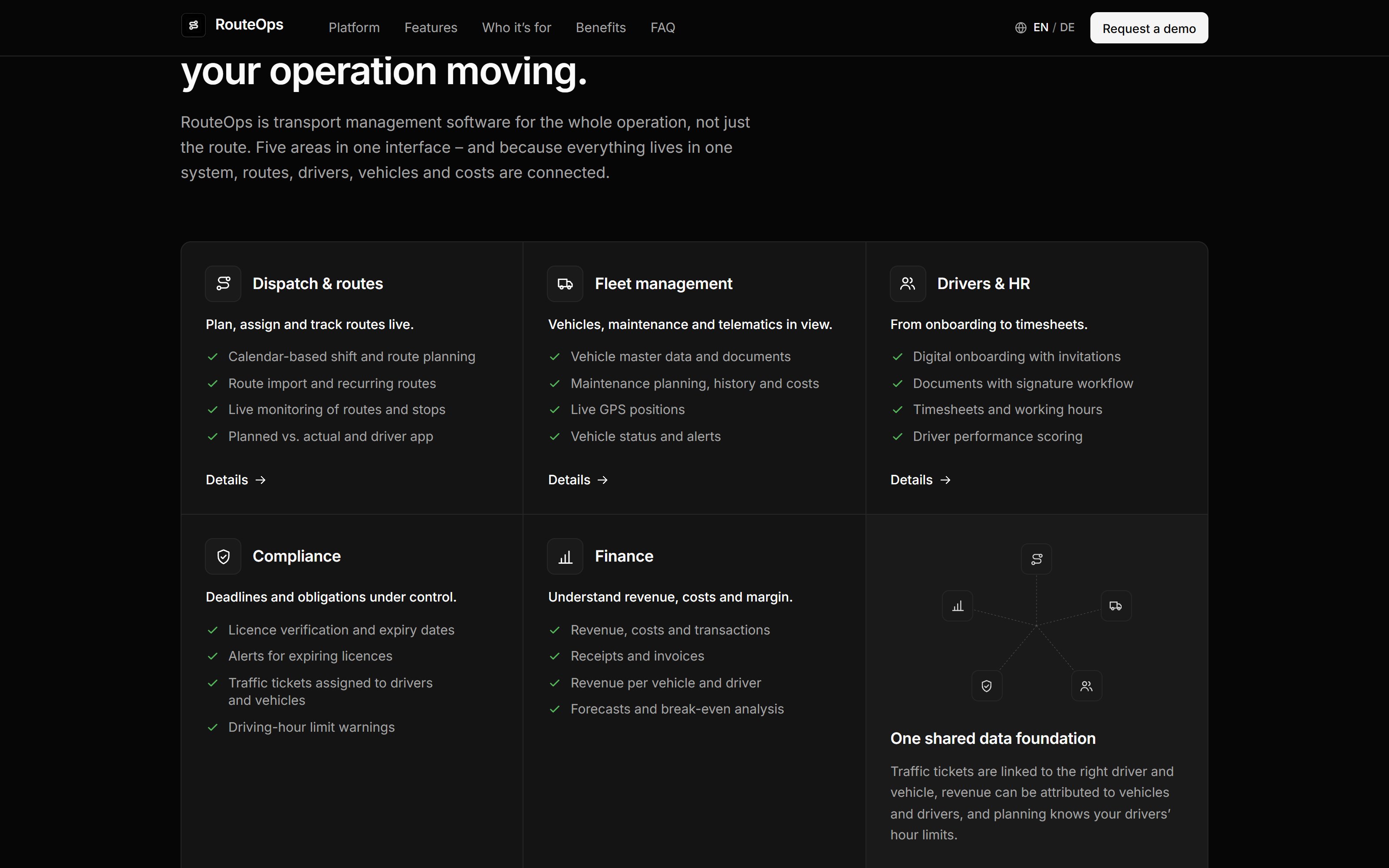
RouteOps is a transport management platform for delivery, taxi and bus companies. I built its marketing website: a German-first, bilingual Next.js site with a single goal — qualified demo requests from transport companies in Germany. It explains the platform's five areas through product interfaces recreated in code and ends in a demo form that scores every request for the sales team.
02
Problem
Transport companies run their operations across spreadsheets, messengers and separate tools. RouteOps needed a website that explains a broad platform clearly to German B2B buyers, earns trust without inflated claims, respects German privacy law (TDDDG / GDPR) and delivers leads that sales can prioritise.
03
Solution
A fast, statically rendered site with a clear story — problem, platform, features, who it's for, workflow, demo. Product screens are built in HTML/SVG instead of heavy screenshots, the demo form validates, scores and tags every request before it reaches sales, and analytics load only after consent.
04
My Role
Website design & development
- Information architecture and a conversion-focused page structure
- Design system matching the RouteOps application
- Bilingual content model — German at /, English at /en, with type-checked parity
- Demo form with shared browser and server validation plus lead scoring
- Consent-first analytics (GTM, GA4, Consent Mode v2) and UTM attribution
- Technical SEO, structured data and strict security headers
05
Tech Stack
- Next.js 16
- TypeScript
- Tailwind CSS 4
- Formspree
- GA4 / GTM
Connected planets
06
Key Features
01
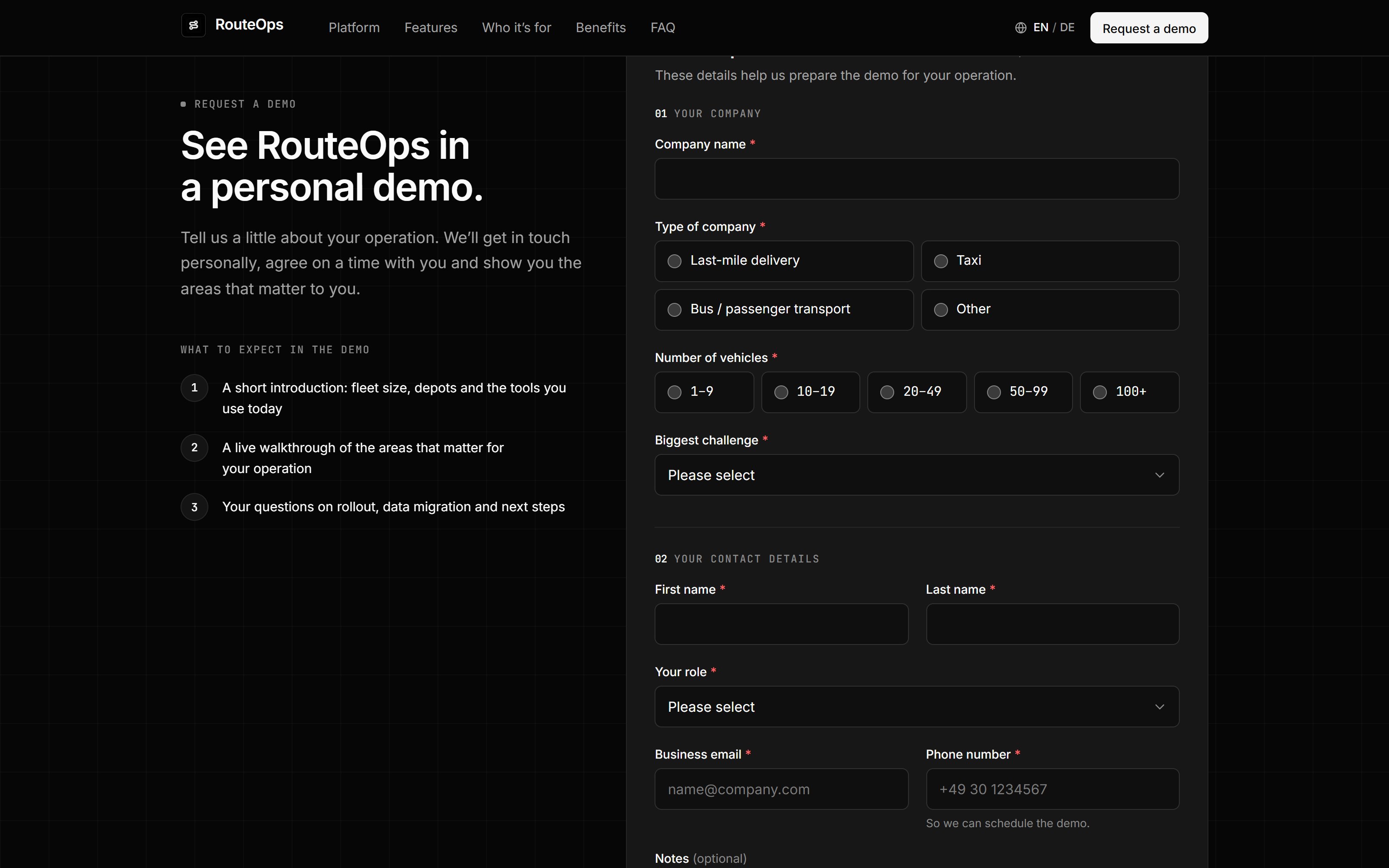
Qualifying demo form
Company type, fleet size, role and main challenge are scored into tiers such as qualified candidate or needs review. Nobody is turned away — sales simply sees who to call first.
02
Product UI built in code
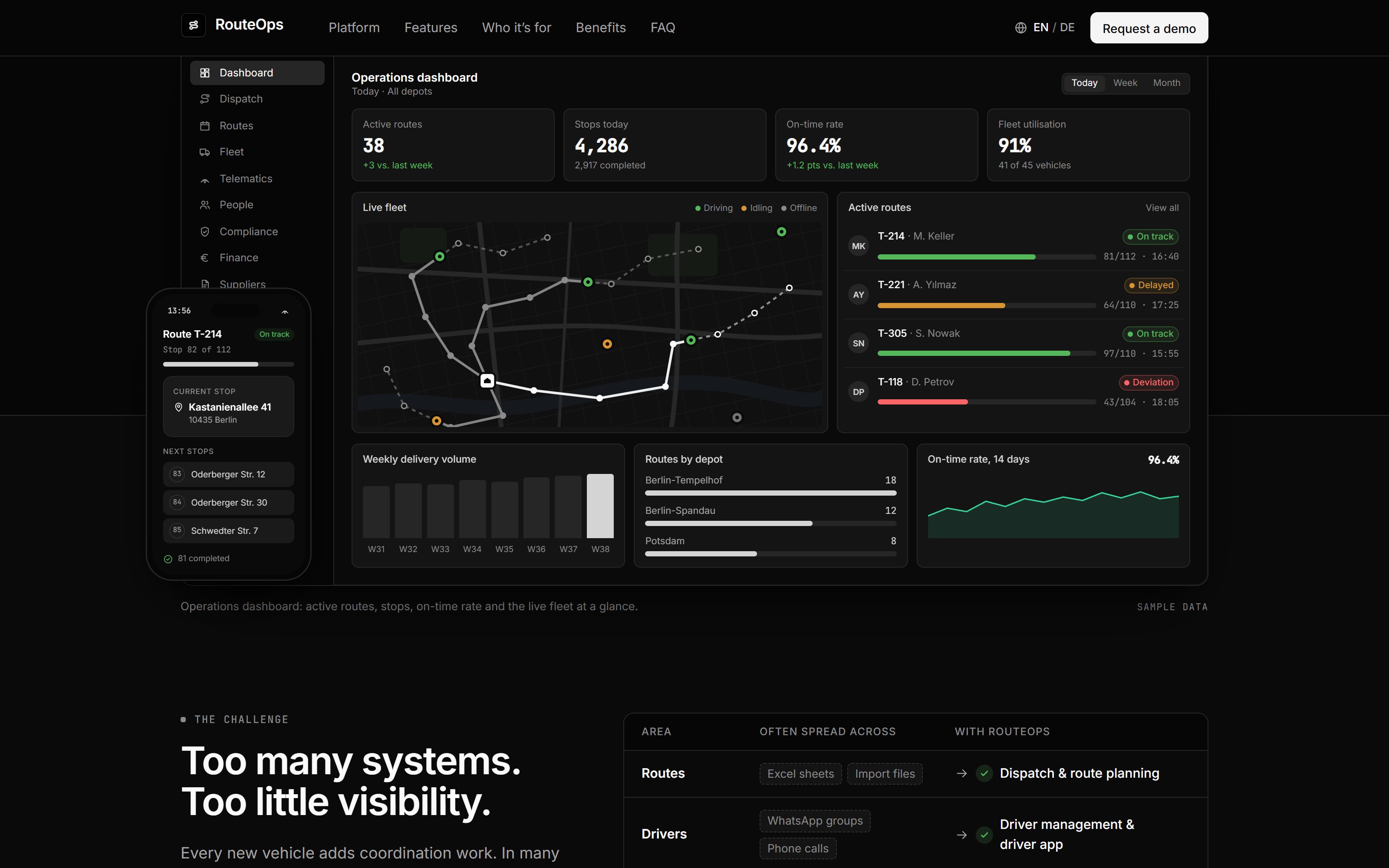
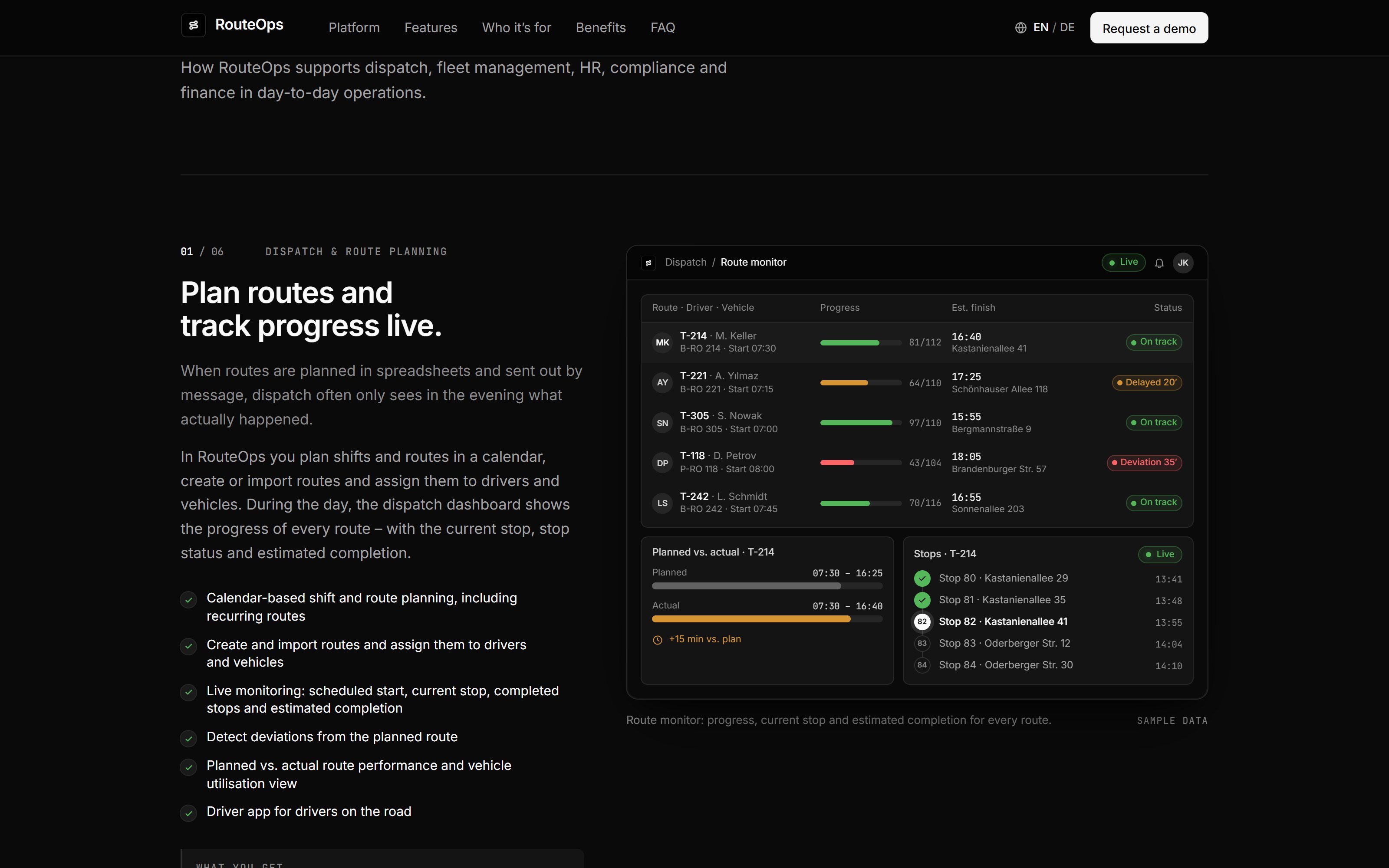
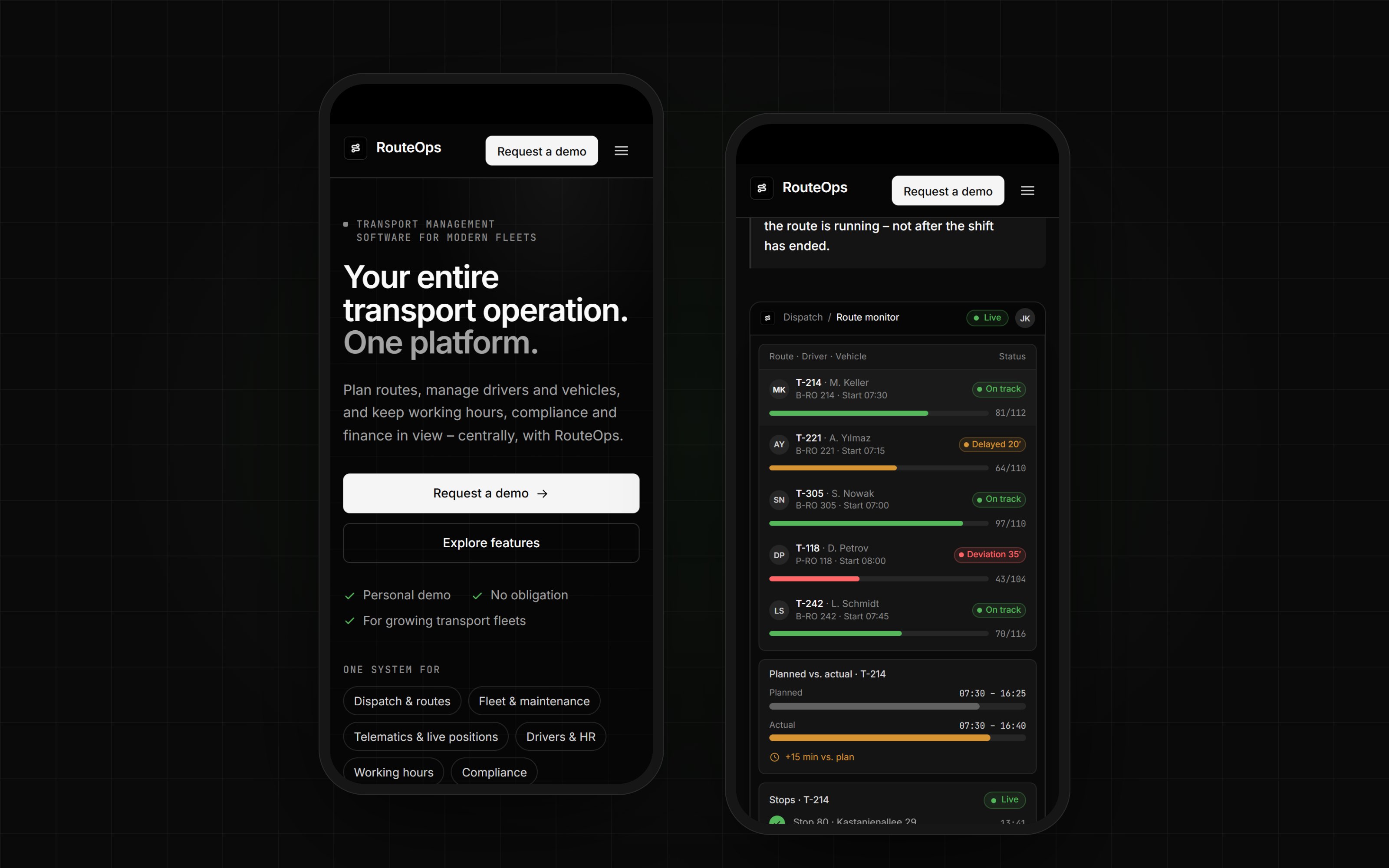
Dashboard, route monitor, driver app, fleet and finance views are HTML/SVG: sharp on every screen, no image downloads, clearly labelled as sample data.
03
Consent-first tracking
No connection to Google before consent. Consent Mode v2, equally weighted Accept and Reject buttons, and events held back until the visitor decides.
04
SEO in two languages
hreflang, canonical URLs, sitemap, JSON-LD (Organization, SoftwareApplication, FAQPage) and generated Open Graph images for German and English.
05
Works without JavaScript
The FAQ is plain HTML and the demo form falls back to a classic form post, so every visitor can still reach sales.
06
Hardened by default
A strict Content-Security-Policy, HSTS and a honeypot plus double-submit protection on the form keep the site and the lead pipeline clean.
07
Screenshots
08
Challenges
- 01
Explaining a broad platform simply
Five product areas can overwhelm a first-time visitor. A strict narrative and anchored feature sections — which double as future SEO landing pages — keep it scannable.
- 02
German privacy law vs. attribution
Marketing needs UTM data, the law needs consent. Attribution is held in memory and only written to storage after the visitor opts in.
- 03
Leads worth calling
One qualification module runs in both browser and server. Freemail addresses are flagged, not blocked — many small transport firms use GMX or web.de.
- 04
Trust without fake claims
Every statement maps to a confirmed product feature: no invented customer numbers, logos or testimonials until they can be backed up.
09
What I Learned
- B2B conversion is about qualifying leads, not just collecting more of them.
- Privacy-first analytics can still give marketing the data it needs.
- Honest copy builds more trust than impressive-sounding numbers.
- Product screens rebuilt in code beat screenshots for speed and clarity.
10
Result
A production-ready bilingual marketing site running on Vercel, with a working lead pipeline to the sales team. It is currently in preview mode — kept out of search results until the final domain goes live.
- Languages
- DE / EN
- Accessibility score
- 100
- Desktop performance
- 99
Next mission
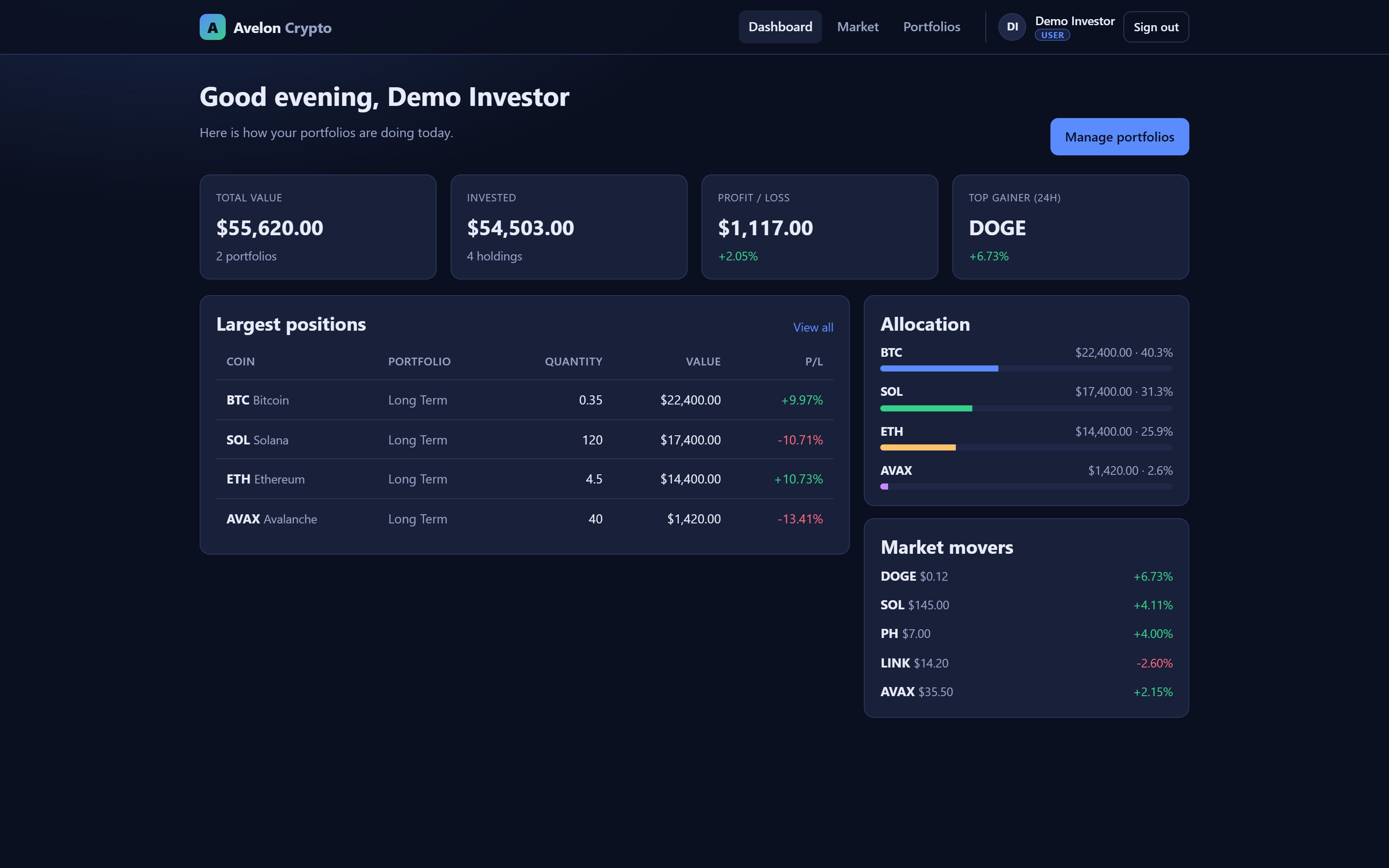
Avelon Crypto
A crypto portfolio tracker with one Spring Boot 3 backend and two front ends — a server-rendered Thymeleaf app and a Vue 3 single-page app — secured with sessions and JWT.
Read case study